Coquina Sands Second Home Tips for Lock-and-Leave Living
April 16, 2026
April 16, 2026
If you want a Naples home you can enjoy for part of the year without feeling tied down the rest of the time, Coquina Sands deserves a closer look. This Gulf-side neighborhood offers a mix of single-family homes and condominiums, but the lock-and-leave experience can look very different depending on the property you choose. In this guide, you’ll learn what makes Coquina Sands appealing for seasonal ownership, what practical issues matter most, and how to think about setup before you buy or leave for the season. Let’s dive in.
Coquina Sands is a Gulf-side Naples neighborhood bordered by the Gulf of Mexico, U.S. 41, South Golf Drive, and Orchid Drive. According to the Coquina Sands Association, the area includes about 230 single-family homes and 660 multi-family units, which gives you a broad range of ownership styles to consider.
That mix is important if you are searching for a true lock-and-leave property. Some homes may offer a lower-maintenance lifestyle through association support, while others may require more hands-on planning for landscaping, exterior care, and storm preparation.
A lock-and-leave lifestyle is not just about location. In Coquina Sands, it is often about the difference between a condominium and a single-family home, and whether a specific property includes association services that reduce your day-to-day responsibilities.
If you are considering a condominium, you may have fewer exterior maintenance tasks to coordinate yourself. If you are looking at a single-family home, you will usually want a more detailed plan for property checks, storm prep, humidity control, and exterior upkeep while you are away.
Before you buy, it helps to think in practical terms about how each property type may fit your travel schedule.
| Property type | Typical lock-and-leave appeal | What to confirm |
|---|---|---|
| Condominium | Often simpler to leave for longer stretches | Association rules, building access, maintenance responsibilities |
| Single-family home | More privacy and flexibility | Yard care, exterior upkeep, storm prep, vendor coordination |
The key is not to assume that every property in Coquina Sands works the same way. A polished seasonal ownership experience usually comes down to the details behind the address.
If you plan to leave a home empty for part of the year, storm preparation needs to be part of your routine. The Atlantic hurricane season runs from June 1 through November 30, and both Ready.gov hurricane guidance and Florida Disaster guidance stress the importance of knowing your evacuation plan and home risks before a storm is approaching.
For a lock-and-leave owner in Coquina Sands, that means you should think in seasons, not last-minute checklists. Your departure plan should already account for wind exposure, water risk, and what happens if an evacuation order is issued while you are away.
A smart pre-departure routine focuses on anything that could become a wind or water issue. FEMA and Ready.gov recommend securing the property, bringing in loose outdoor items, and using protective measures for windows when appropriate.
Before leaving your Coquina Sands home, your checklist may include:
This kind of routine is especially useful if you split time between Naples and another primary residence.
In coastal Southwest Florida, moisture management is one of the biggest issues in an empty home. The EPA’s mold guidance recommends keeping indoor humidity low, ideally between 30% and 50% and below 60%.
That matters because a home that sits closed up for weeks or months can develop problems fast if HVAC systems, drain lines, or moisture-prone areas are not checked before departure. In practice, a lock-and-leave home in Coquina Sands should never be left completely unmanaged.
Before you leave, it is wise to confirm that the home is set up to control humidity consistently. That may include reviewing air conditioning settings, checking condensate drain lines, and making sure any vulnerable areas have been inspected.
When you return, make moisture control part of your first walkthrough. Look for leaks, signs of humidity buildup, and any HVAC performance issues before settling back in.
A smooth lock-and-leave experience depends on more than the home itself. You will also want a handle on city services, waste collection, alerts, and nearby amenities before you begin using the property seasonally.
The City of Naples Utilities Department maintains water, sewer, and irrigation infrastructure, and the city also manages residential solid waste collection. Garbage is collected twice weekly, recycling is collected weekly, and carts should be placed out by 7 a.m. and brought back the same day.
If you own a home that sits vacant part of the year, those details matter. You want your service schedule, vendor timing, and home checks to work together rather than create avoidable issues when you are away.
Mail and deliveries are easy to overlook, but they can create visible signs that a property is unoccupied. The USPS offers Hold Mail service for up to 30 days, and Informed Delivery can help you monitor incoming mail and packages remotely.
Official alerts are just as important. Ready.gov notes that the FEMA app can provide weather alerts for up to five locations, and the same USPS bulletin references monitoring tools that help seasonal owners stay informed while living elsewhere. The research also notes that Collier County’s Alert Collier system can send alerts to multiple addresses by phone, text, email, or app, which can be especially useful if Coquina Sands is not your only residence.
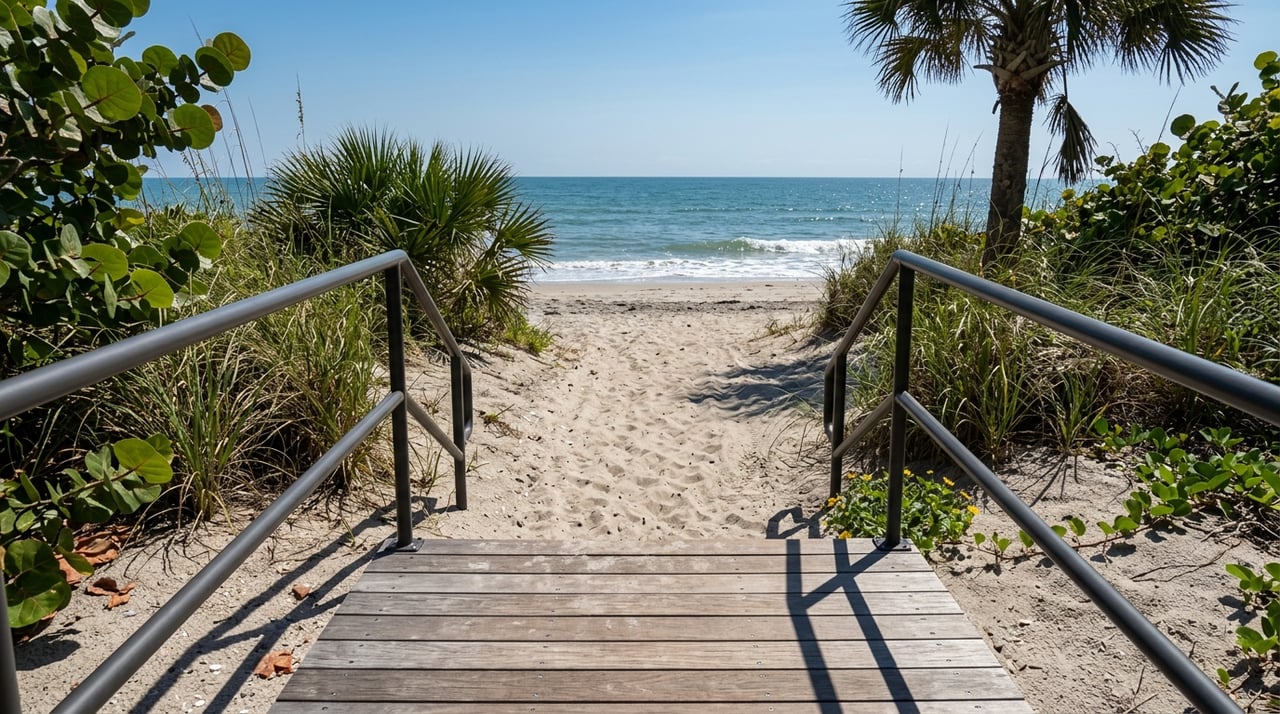
For many buyers, one of the strongest lock-and-leave advantages in Coquina Sands is easy access to the coast without committing to a larger beachfront estate. Lowdermilk Park is one of the most useful nearby amenities to know. The city describes it as a premier beachfront park with parking, restrooms, showers, picnic features, gazebos, a concession stand, and ADA beach mats.
That kind of convenience can make seasonal ownership feel simple once you arrive. You can settle in, head to the beach, and enjoy the neighborhood without a long planning process.
Beach parking is enforced year-round in Naples. According to the city’s beach parking permit information, parking requires either a permit or pay-by-space, and eligibility for free annual permits depends on residency or property-taxpayer status under the city and county rules.
That is a small detail, but it is worth handling ahead of time. If you use the home seasonally, checking permit eligibility before each return can save time and make your first few days back feel much easier.
The city also notes that the Naples Pier is currently closed for rebuild, with pedestrian bypasses at Broad Avenue South and 13th Avenue South. For that reason, it is smart to check current beach access information before every trip back to Naples.
One of the most important mistakes seasonal buyers can avoid is assuming that an entire neighborhood carries the same flood profile. The City of Naples states that its 2024 Flood Insurance Rate Maps are in effect for construction and insurance purposes, and Collier County notes that additional revisions are projected for later in 2026 pending appeals.
For you as a buyer or owner, the practical takeaway is simple: evaluate flood risk by specific address, not by neighborhood name alone. That can affect insurance planning, long-term costs, and how you prepare a property before leaving town.
Timing matters with flood coverage. According to Ready.gov flood guidance, flood insurance generally takes 30 days to take effect.
If you are buying a seasonal home or updating your coverage, that is something to address early. It should be part of your ownership setup, not something you try to solve when a storm is already on the map.
If a storm affects your property while you are away, your first job is to follow a calm process. FEMA advises homeowners to photograph damage, save receipts, and shut off main electrical power and water systems when appropriate before moving into repairs.
That order matters because rushing can create bigger problems. A good lock-and-leave plan includes knowing who will check the property, how damage will be documented, and how repair decisions will be made if you are not in Naples.
The research also notes that Collier County warns homeowners about post-hurricane scams and encourages them to verify contractor licenses, insurance, and permits before signing any repair agreement. That is especially important for seasonal owners who may feel pressure to act quickly from a distance.
Collier County’s drop-off center facilities can also be a useful local resource for certain recyclable and special waste items during cleanup planning. If storm recovery is needed, using official local resources and licensed professionals can help you protect both your property and your time.
Seasonal ownership works best when you have more than one line of support. In addition to city departments and service providers, the Coquina Sands Association can be a helpful neighborhood-level resource because it shares updates, hosts meetings, and advocates with city government.
That kind of local connection can be valuable if you are not in Naples year-round. It helps you stay informed about neighborhood issues, timing, and practical concerns that may affect your home.
Coming back for the season should feel easy, not like opening a long to-do list. A smart return routine starts with the basics: check for leaks or humidity issues, verify utilities and HVAC performance, confirm that mail handling has ended or been extended, and review beach parking or access updates before you settle into your usual rhythm.
If you are considering buying a lock-and-leave home in Coquina Sands, the right fit often comes down to lifestyle, maintenance tolerance, and how much support a property offers when you are away. That is where thoughtful guidance can make a real difference. If you want expert help evaluating seasonal ownership options in Naples, connect with Michael Dekic for a polished, concierge-level approach tailored to your goals.
Stay up to date on the latest real estate trends.

Meet Michael Dekic, your dedicated real estate expert. Ready to guide you to your dream home!